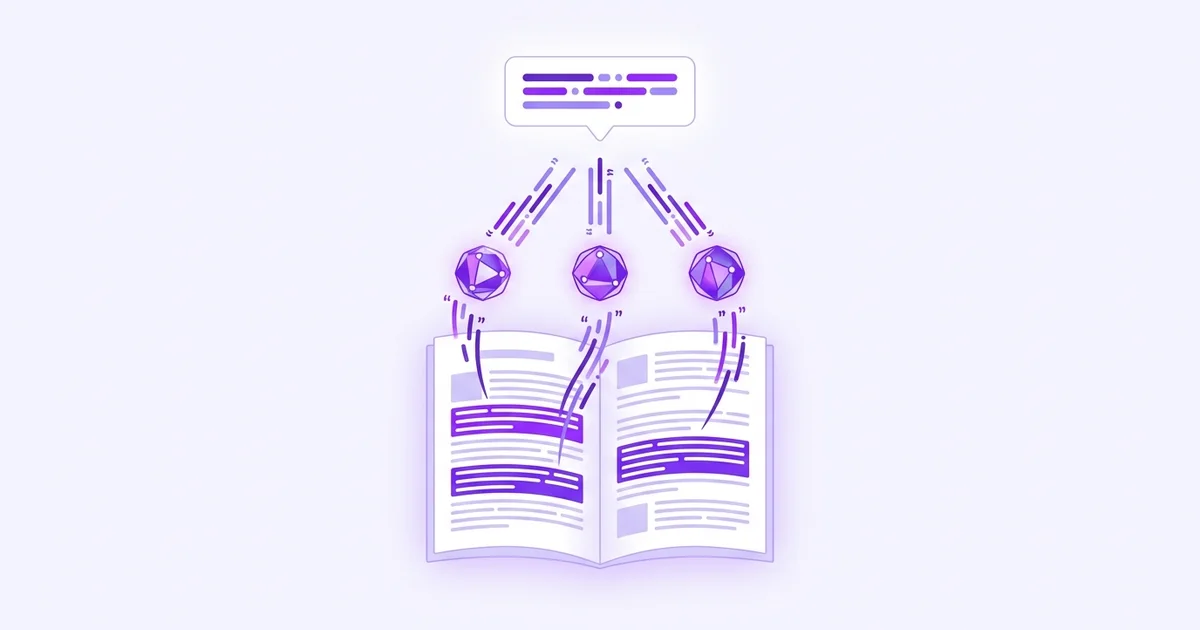
- GEO structures your content so ChatGPT, Gemini, and Perplexity mention and cite your brand inside one generated answer.
- SEO wins a ranked link. GEO wins a mention or a citation, and there is no second page to fall back on.
- A Princeton-led study found structure, statistics, and citations lifted source visibility by up to 40%.
- Measure it by asking the engines the same buyer prompts on a regular schedule.
How is GEO different from SEO?
Traditional SEO is a competition for ranked links. Ten results appear on a Google page, and your job is to reach the top.
GEO is a completely different competition.
When a buyer asks ChatGPT "what's the best tool for X," the engine doesn't return a list. It writes a short paragraph naming three to five brands.
Your brand is either in that paragraph or it isn't. There's no position two to fall back on, no second page to aim for later.
That shifts what a win actually looks like. In SEO, you win a ranking position.
In GEO, you win a mention (your brand gets named in the answer) or a citation (your page gets linked as a source). A 2023 Princeton-led study that coined the term found that adding citations, quotable statistics, and clear structure improved source visibility in AI-generated answers by up to 40% (Aggarwal et al., Princeton, 2023).
| Classic SEO | GEO | |
|---|---|---|
| Where you compete | A ranked list of ten links | One generated answer |
| What a win looks like | Ranking position 1 to 10 | A mention or citation in the response |
| Primary signals | Backlinks, keyword coverage | Clear structure, quotable facts, cited sources |
| How you measure it | Rank trackers, Search Console | AI visibility scans across engines |
| What failure looks like | Your page lands on page 2 | Competitors get named and you don't |
Why does GEO matter right now?
Search behaviour is changing faster than most people realise. Pew Research found 34% of US adults had used ChatGPT by 2025, roughly double the share from two years earlier, and buyers are using it to research products, not just to write emails.
The pattern plays out like this. A buyer at the research stage opens ChatGPT and types: "what's a good brand monitoring tool for a small SaaS?"
The engine gives them a paragraph with four brand names. Those four brands get the visit and the shot at the sale.
Every other brand in that category might as well be invisible for that buyer at that moment.
You can't reverse that shift. But you can make sure your brand is in the paragraph.
What makes content GEO-friendly?
AI engines extract and reassemble content rather than ranking it whole. The pages they draw from most are the ones that are easiest to extract from.
That means two types of signals matter: structural clarity and trust.
Structure signals
- Answer-first openings. State the answer in the first 40 to 60 words. Engines frequently lift this opening as their direct response.
- Question-shaped headings. H2s that match how people phrase their prompts give engines clean extraction targets.
- Comparison tables. Structured comparisons get pulled into AI answers almost verbatim.
- FAQ sections. Clear question-and-answer pairs give engines ready-made content for follow-up queries. Marking them up with FAQ schema makes them easier still to quote.
Trust signals
- Quotable facts and statistics. Concrete numbers with named sources are far more likely to be cited than general marketing copy.
- External citations. Pages that reference authoritative sources are treated as more trustworthy by the model.
- Consistent brand identity. Using the same description of your brand across your site, directories, and third-party listings helps engines understand who you are and what you do.
Do ChatGPT, Gemini, and Perplexity cite the same sources?
No. In our August to October 2026 scans, only 1.5% of the websites cited for the same question were cited by all three engines, and 88% were cited by just one.
A citation is a link an AI engine shows as the source behind its answer. Each engine reads its own slice of the web, so GEO is really three targets, not one.
ChatGPT leaned on help docs and research, Gemini on blog posts and YouTube, and Perplexity on Reddit and forum threads. Our study of 7,409 citations breaks down which page types each AI engine cites most.
How do you know if GEO is working?
You measure it the same way your buyers experience it: by asking the engines. Take a set of prompts your prospects actually type, run them against ChatGPT, Gemini, and Perplexity on a regular schedule, and record whether your brand was mentioned, where it appeared in the answer, whether your domain was cited as a source, and who showed up when you weren't.
One-off checks are misleading because AI answers shift constantly. What you need is a trend: the same prompts, asked the same way, over weeks and months.
Lead Rescue runs those scans every day and presents the results in plain language, so you can act on what's actually happening without needing an SEO background to read the data.
If you want a step-by-step plan for getting your brand into those answers, see our guide on how to get your brand mentioned by ChatGPT.